


Explore the craft.
Step into the classroom.

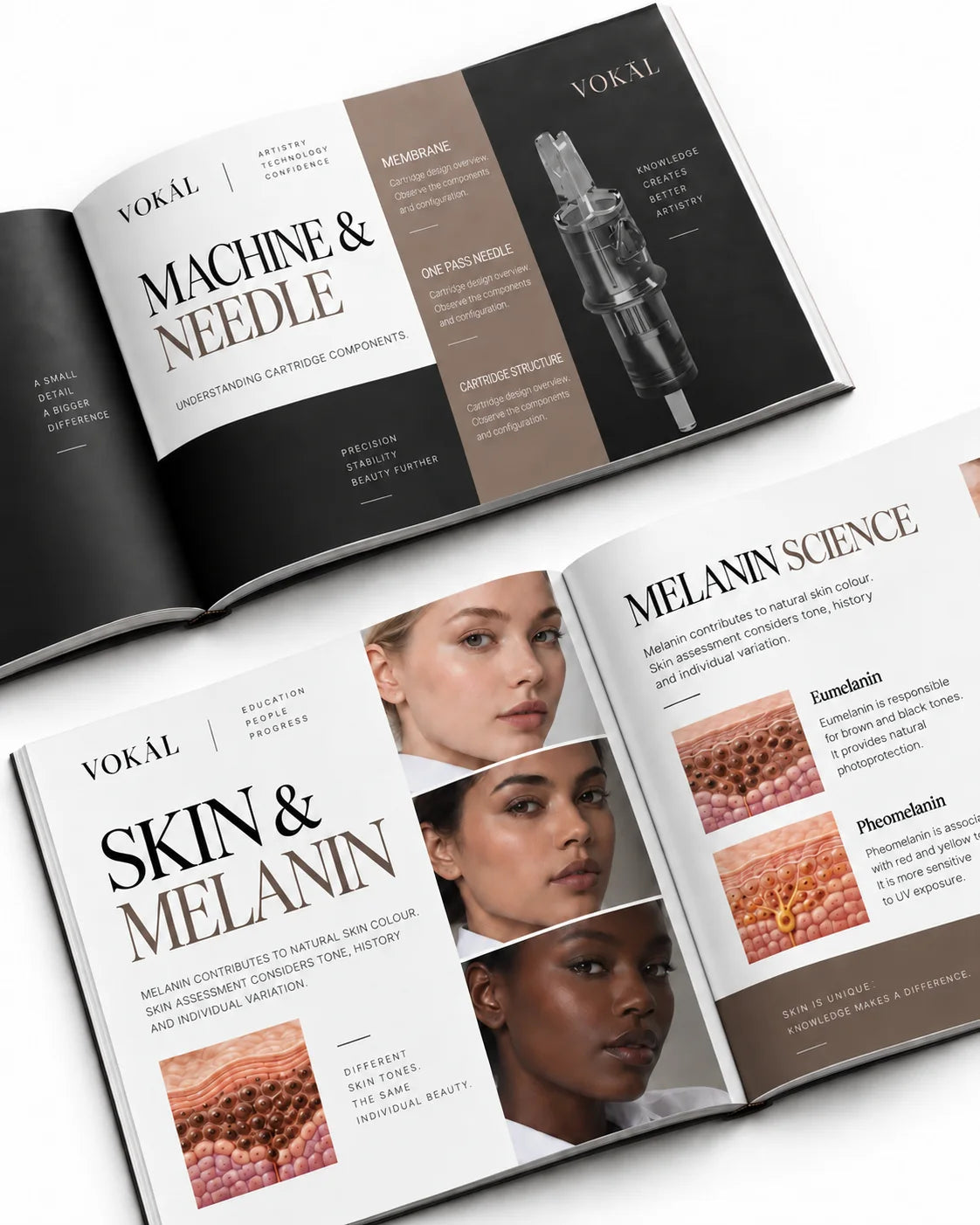
Explore VOKAL learning notes, real classroom images and the tools behind the practice. Continue in person with our training team.

Latest articles

View all articles

Learning guides

Explore in-person training

Your next step, with VOKAL.

Talk to us about the product or technique you want to understand.

Ask VOKAL
Back to all guides

How to choose your next PMU course

Start with the skill you want to improve. Then look for a learning format that helps you practise it and understand the result.

VOKAL Education · Learning
VOKAL education and academy materials

Define one useful outcome

Before comparing courses, write down the task you want to become more confident with. It might be mapping a balanced brow, explaining a colour choice or recognising what changed between a fresh and a healed result. “Improve my work” is a broad ambition; a specific task makes a course easier to evaluate.

Look beyond the course title

Ask to see the syllabus. Does it describe the level expected before joining? How is practice organised? Is there feedback on your work, and what does that feedback cover? A course name or a certificate image alone will not answer these questions. If you already work with clients, choose training that addresses a gap in your process rather than repeating a familiar introduction.

Compare the learning format

Live teaching, recorded lessons and practical sessions serve different needs. Think about your language, schedule and access to equipment. Ask which materials are included, how long you can access the lessons and whether support continues after the teaching session. Confirm these details for the particular VOKAL course you are considering; formats and availability can differ.

Prepare a small portfolio

Bring a few examples of your own work or practice exercises and a short list of questions. Label photographs clearly as fresh, healed or practice work. This gives a trainer something concrete to discuss. Use VOKAL Practice Skin for structured exercises before progressing to supervised work with clients.

Before you book

Tell our training team your location, current experience and the technique you want to learn. Ask about prerequisites, the course outline and the next available format. Also check the requirements for professional practice where you intend to work; a training certificate and permission to practise are separate matters.

Explore with VOKAL

Ask about VOKAL training Explore VOKAL Practice Skin

Further reading: PMUHub education and industry topics. This guide is written by VOKAL; product links refer to VOKAL products.

Continue learning in person.

Ask about the VOKAL course that fits the skill you want to develop.

Ask about training on WhatsApp
Back to all guides

Brow techniques: start with the result

A convincing brow design starts with a conversation, a careful assessment and a clear visual goal.

VOKAL Education · Brows
VOKAL powder brow education reference

Describe what the client sees

Begin with the appearance the client wants: the impression of individual hairs, a softly shaded finish, or a combination. Ask them to explain what they like in a reference image. The density, front of the brow and tail may matter more to them than the name of the technique. A shared description makes the consultation more useful.

Understand the tool, then the choice

Machine hair strokes and manual microblading use different tools. In her PMUHub interview, Mersida Hodžić Ramić describes how machine work expands the ways she designs strokes, while emphasising individual consultation. That does not make one technique the automatic answer for every person. Ask a trained practitioner to assess the client’s skin, existing hair and any previous work before agreeing on an approach.

Make mapping a conversation

Review the proposed shape from the front and both sides. Discuss the arch, length and density before treatment, rather than relying on a reference photograph alone. A VOKAL Brow Mapping Ruler can support measurement and practice, but a measuring tool does not decide which design suits a person. Record the agreed plan clearly.

Choose the pigment deliberately

Keep the chosen design and colour decision connected. Review the VOKAL brow shade information and compare the intended depth with the client’s natural hair and existing pigment, where present. Do not select a shade only because it looks attractive on a screen. If you are unsure which VOKAL product fits the intended use, ask our team with the exact shade code.

Review healed work

When comparing examples, distinguish fresh photographs from healed results. Keep lighting and camera angle consistent in your own records. This makes later discussions about the design and colour more meaningful than comparing heavily edited images.

Explore with VOKAL

Explore VOKAL brow pigments View the VOKAL Brow Mapping Ruler Ask about brow training

Further reading: PMUHub interview with Mersida Hodžić Ramić. This guide is written by VOKAL; product links refer to VOKAL products.

Continue learning in person.

Ask about the VOKAL course that fits the skill you want to develop.

Ask about training on WhatsApp
Back to all guides

Lip blush: colour starts with the natural lip

A bottle colour is only one part of the conversation. Start by understanding the lip and the result the client hopes to see.

VOKAL Education · Lips
VOKAL lip blushing education reference

Agree on the desired finish

Ask whether the client wants a subtle enhancement, more visible colour or a softer-looking transition across the lip. Use references to discuss the appearance, not to promise an identical outcome. Huy Victor’s PMUHub interview highlights the importance of considering natural lip colour and skin tone when planning an ombré result. It is a useful reminder to assess the starting point before discussing a shade.

Separate enhancement from correction

A straightforward colour-enhancement enquiry and a request to correct uneven or dark-looking lips need different conversations. Do not turn a colour wheel, a photograph or a screen swatch into an automatic treatment plan. Previous pigment, the natural lip and the client’s goals should be reviewed by a practitioner trained for the proposed procedure. Product selection follows that assessment.

Use the shade tools as references

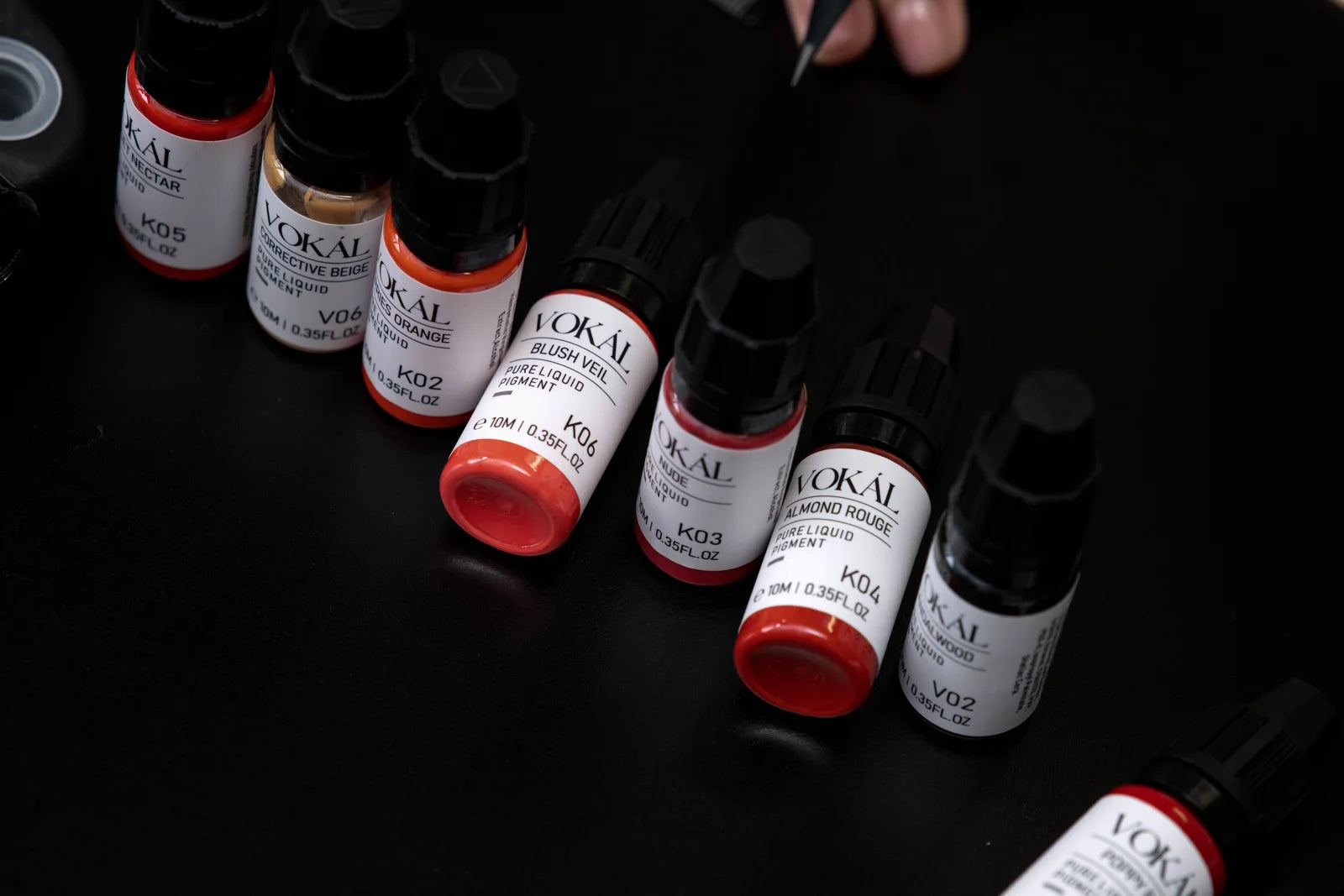
In the VOKAL pigment studio, you can compare codes, view the original chart and inspect the bottle. These tools help you identify and discuss products. The 3D liquid is a visual demonstration; it is not a prediction of healed colour on a particular lip. Keep the code, product label and intended use together when asking a question.

Record the plan clearly

For a product enquiry, note the VOKAL shade you are considering and the intended procedure. For a training enquiry, explain the stage of colour planning you find difficult. Our team can direct you to product information and learning options. Precise mixing recipes should come from verified VOKAL guidance and an individual professional assessment, not a generic online example.

Plan for the full experience

Include healing, aftercare and follow-up in the consultation. The FDA notes that permanent makeup carries risks such as infection and allergic reactions. A clear assessment and appropriate professional guidance belong in the process; a shade preview cannot establish suitability for treatment.

Explore with VOKAL

Explore VOKAL lip shades Ask about a lip pigment Discuss lip training

Further reading: PMUHub interview with Huy Victor on ombré lips. This guide is written by VOKAL; product links refer to VOKAL products.

Safety reference: FDA — Tattoos & Permanent Makeup.

Continue learning in person.

Ask about the VOKAL course that fits the skill you want to develop.

Ask about training on WhatsApp
Back to all guides

How to read a pigment shade before choosing it

Use the code, the chart and the intended procedure together. A colour name alone is not enough.

VOKAL Education · Colour
VOKAL K06 pigment bottle with its original liquid colour image

Start with the procedure

The first useful filter is what the pigment is intended for. Open the relevant category in the VOKAL pigment studio, then compare shades within it. Brows, lips and other applications should not be treated as interchangeable simply because two colours look similar. Read the product information for the specific code before deciding.

Keep the code visible

Colour names can be easy to confuse, especially when discussing products across languages. Use the complete code in orders, training notes and product enquiries. Compare that code against the bottle label and original colour chart. The website’s photographs and 3D view are connected to the selected shade so you can keep the product identity in view as you browse.

Look at more than one reference

A liquid scene, bottle photograph and chart show different aspects of a pigment. Lighting, the amount of visible liquid and the display you are using can affect the impression of colour. Compare the available references rather than making a decision from a single image. In person, follow the current product instructions when handling or preparing the material.

Distinguish demonstration from outcome

Rotating the bottle or dispensing virtual drops is a way to explore the product. It does not demonstrate implantation, healing or a validated mixing formula. A healed result also involves the client and the professional procedure. Treat screen colour as a starting point for discussion, then use verified VOKAL guidance and professional judgement.

Check before adding to cart

Confirm the code, bottle option and quantity. Where an online purchase is available, the site shows the actual Shopify price and availability. If a shade has an enquiry button, ask VOKAL about that exact code. Do not substitute a similar-looking product without confirming that it fits the intended use.

Explore with VOKAL

Open the VOKAL pigment studio Ask for help choosing a shade

Further reading: VOKAL pigment charts and product information. This guide is written by VOKAL; product links refer to VOKAL products.

Continue learning in person.

Ask about the VOKAL course that fits the skill you want to develop.

Ask about training on WhatsApp
Back to all guides

Choose your machine and cartridge together

Compare the working setup as a whole: the procedure, the machine, the cartridge and the way you practise.

VOKAL Education · Equipment
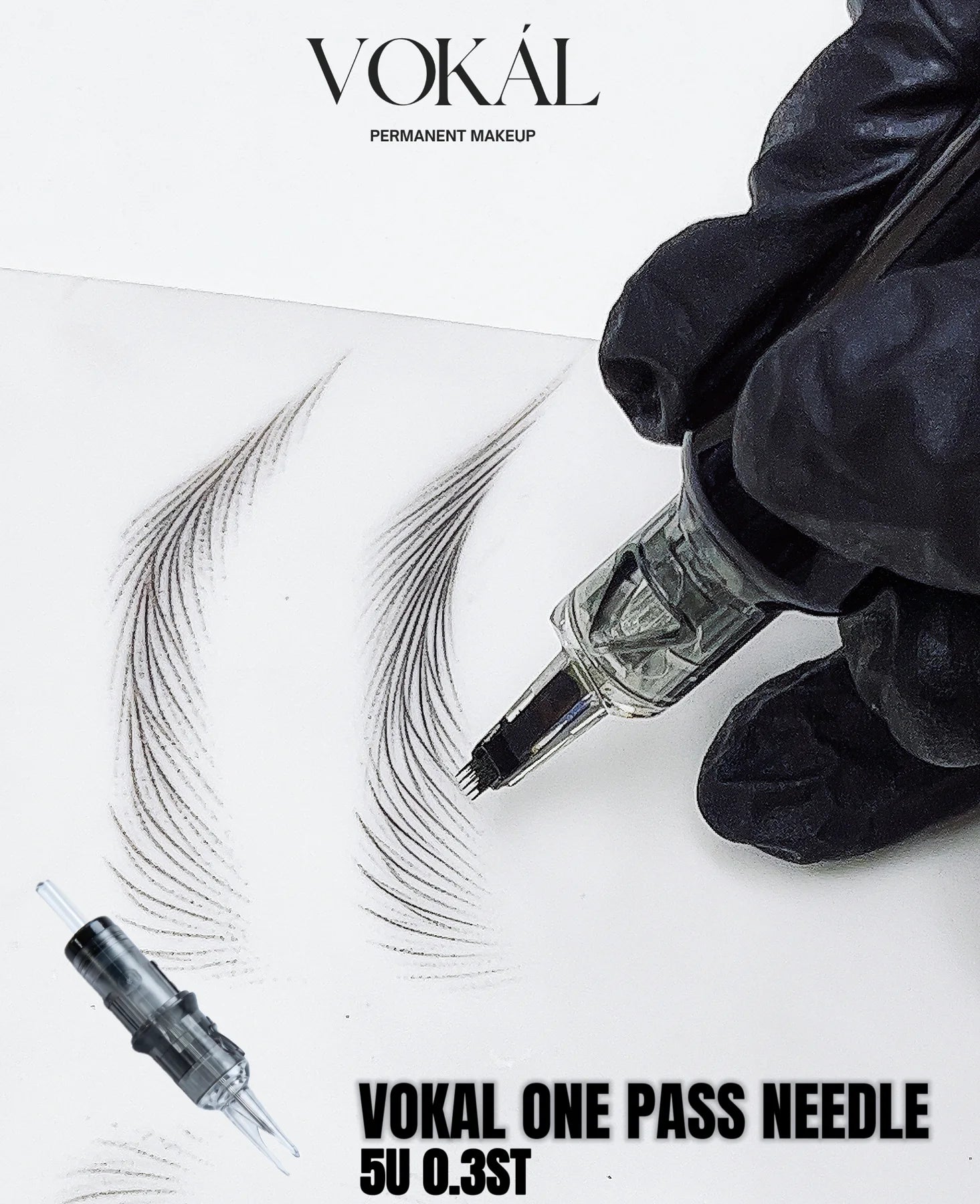
VOKAL One Pass Needle product information

Name the task first

A useful equipment comparison starts with the procedure you intend to perform and the control you are learning. Write down the machine you use, the cartridge you plan to pair with it and the feature you want to understand. This is more helpful than asking for the “best” machine without any context.

Check compatibility explicitly

Read the product information for the exact machine and cartridge. The VOKAL Red Universal Needle is described as compatible with most PMU machines; “most” should not be read as “every”. Specialised systems can have their own requirements. When uncertain, give our team the model name and cartridge reference before ordering. Do not assume that all VOKAL cartridges share the same fitting.

Separate features from technique

The VOKAL One Pass Needle product page describes its pigment-flow and support design. Those features are product information, not a guarantee of a particular healed result or a substitute for learning control. Review the available options, confirm the configuration you need and practise the approach taught in your training.

Compare the machine information

For a machine such as VOKAL K02, review the listed intended applications, finish and operating information. Ask for clarification if a specification you need is not shown. Avoid filling a missing specification with a number from a visually similar machine. Your purchasing decision should use the actual model details.

Keep a practice record

Use suitable practice material to record how a setup feels and which questions remain. Change one variable at a time in a supervised learning context so feedback is easier to interpret. Before professional use, follow the current manufacturer instructions and your training requirements. Our product team can help identify the right listing; our training team can discuss learning options.

Explore with VOKAL

View VOKAL K02 View VOKAL One Pass Needle View VOKAL Red Universal Needle Ask about compatibility

Further reading: VOKAL machine and cartridge product information. This guide is written by VOKAL; product links refer to VOKAL products.

Continue learning in person.

Ask about the VOKAL course that fits the skill you want to develop.

Ask about training on WhatsApp
Back to all guides

SMP: plan the hairline before the details

A hairline is a design decision that needs to make sense for the person wearing it. Begin with the whole face, not one close-up.

VOKAL Education · SMP
VOKAL scalp micropigmentation education reference

Understand the visual goal

Scalp micropigmentation conversations often begin with a reference photograph. Ask what the client likes about it: a soft-looking edge, a more defined appearance or the impression of greater density. These are different design goals. A detailed close-up alone may not show how the proposed result relates to the person’s face and hairstyle.

Review the starting point

PMUHub’s hairline guide discusses the original hairline, facial features, hair-loss pattern and possible future change. Use these as consultation topics, rather than as a template that determines the result. Older photographs can help explain what the client is referring to. A professional assessment is still needed before agreeing on a treatment plan.

Compare the design from several views

Discuss the front, temples and side profile together. Make the proposed direction clear before focusing on individual marks. A balanced consultation should explain the intended appearance, what is uncertain and how the result will be reviewed. Do not promise that a screenshot or a sketch is an exact forecast.

Choose training for the skill gap

For an artist learning SMP, identify whether the main question concerns design, product knowledge, practice control or client communication. Ask about the prerequisites and feedback format of any course you are considering. A course title does not describe the depth of support available; request the actual outline.

Keep product selection specific

Use the SMP category in the VOKAL studio to identify the listed shades and their original chart information. Confirm intended use and instructions for the exact product. Never choose a pigment solely because it appears black on screen. If you need guidance, share the product code with our team and explain the application you are preparing for.

Explore with VOKAL

Explore VOKAL SMP shades Ask about SMP training

Further reading: PMUHub guide to SMP hairline shapes. This guide is written by VOKAL; product links refer to VOKAL products.

Continue learning in person.

Ask about the VOKAL course that fits the skill you want to develop.

Ask about training on WhatsApp